

Safely delivery of a forklift depends only if a good attachment is present. Loose connection, worn fork extension, or damaged clamp can lead to instability of the load and an accident.
Operators should examine the forklift attachments every shift, which is why. Troubleshooting can go a long way. Just minutes of meticulous verification could reveal potential issues before equipment gets the burden applied.
Start with a Visual Inspection
This walk around the forklift and attachments should be performed before every engine start. Search for visible clues of damage and wear or missing parts.
Check for:
- Cracks or bent components
- Loose screws, pins, or locking devices
- Excessive rust or corrosion
- Hydraulic leaks
- Damaged hoses
- Missing safety labels or guards
Never expect that a tiny imperfection does not affect the quality of work. Even though an attachment is able to function in the outside world, it can be structurally unsound.
Carefully Test the Attachment
Do a visual inspection, as well as load testing. Test everything for ensuring it works and that you are having the correct response back from controls.
Train that all locks must be fully engaged. Do not use the forklift until a problem assessment has been done if the attachment moves when it should be fixed.
For workplaces that make use of multiple types of forklift accessories on a regular basis with regard to operation, the operators need to be thoroughly trained in the proper connection and locking procedure for each kind.
Inspect Forks and Extensions
This is because forks endure heavy loads and repeated impact. Check for bends, cracks, and excessive wear around heel and shank.
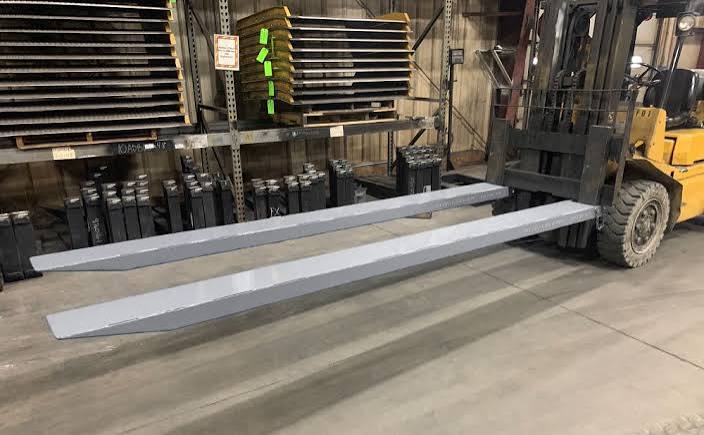
For fork extensions, inspect them for any cracks, distortion, and if they are secured in place. There are also extensions that should sit correctly on the forks and that need to be adapted to the load.
Never use a tool which is worn out or loose.
Check Hydraulic Components
Some attachments use hydraulic systems to move, grip, rotate, or position loads. Check hydraulic hoses, fittings, and cylinders before operating the equipment.
Look for signs of:
- Fluid leaks
- Cracked hoses
- Loose fittings
- Damaged protective coverings
- Unusual cylinder movement
Never, use your bare hand to look for a hydraulic leak. Injuries due to high-pressure fluid.
Test the Attachment Carefully
Perform a visual inspection and test under load conditions. Verify the functionality of everything and that you have a correct response from controls.
Listen for unusual noises. Watch out for fast or erratic motion
If the attachment does not respond in an expected manner, stop, and report. Even if the issue appears to be minor, do not keep on running it.
Check Load Capacity
Every attachment has limits. An attachment may alter the rated capacity of a forklift.
Before picking a load, ensure the attachment is appropriate for the work to be performed, and that you stay within the rated capacity of the completed assembly per manufacturers recommendations.
This is especially important with the use of forklift extensions, clamps booms, or any other type of special equipment.
What If You Find a Fault?
Do not operate defective equipment. Document the incident and adhere to isolation and repair procedures as per your work practices.
All repairs or adjustments must only be carried out by an appropriate person. Maintain inspection records as dictated by your own workplace procedures.
Final Thoughts
You should never take a pre-shift inspection as just another checkbox on a list. Prestart checks should include the following: attachment, connection point, hydraulic component, and load-rating information.
This prevents damage early on so it can be sorted out and help ensure that your forklift is safer to use. With the standard forklift attachments or special fork extensions, spending a couple of minutes checking them out makes a world of difference to workplace safety.